Ratan Tata: The Visionary Leader Who Redefined Business, Humanity, and Philanthropy
Introduction to Ratan Tata
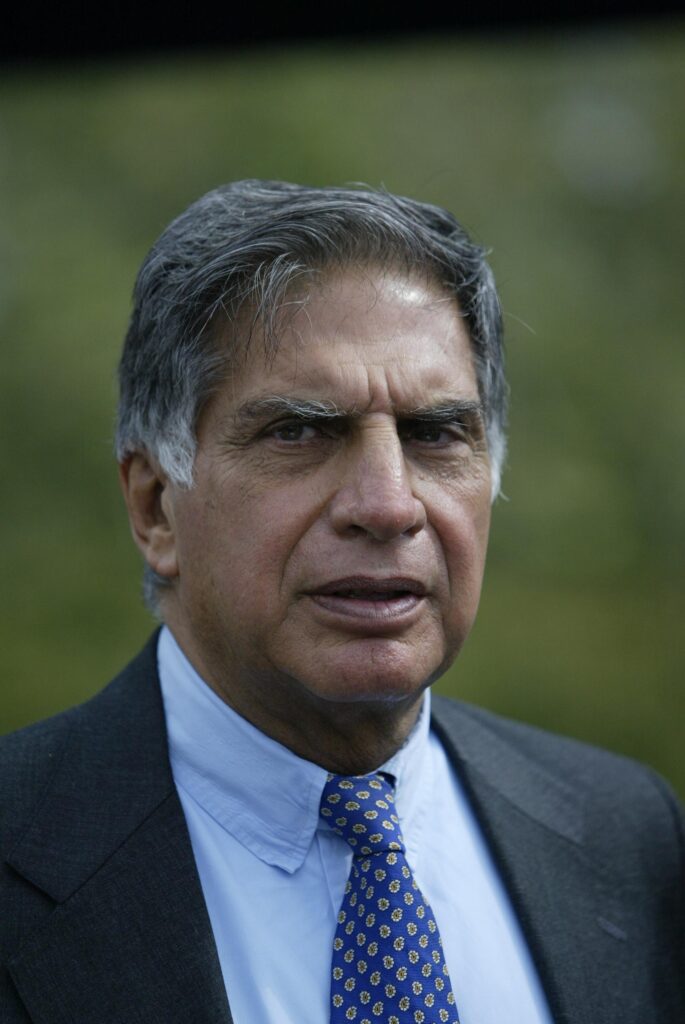
Few individuals have left an impact on India as profound as Ratan Tata. Revered as a business titan, philanthropist, innovator, and humanitarian, he became a symbol of integrity and responsible leadership. Unlike many corporate leaders whose influence is measured solely by financial achievements, Ratan Tata’s legacy extends far beyond boardrooms and balance sheets. His life story reflects the power of vision, compassion, and ethical decision-making.
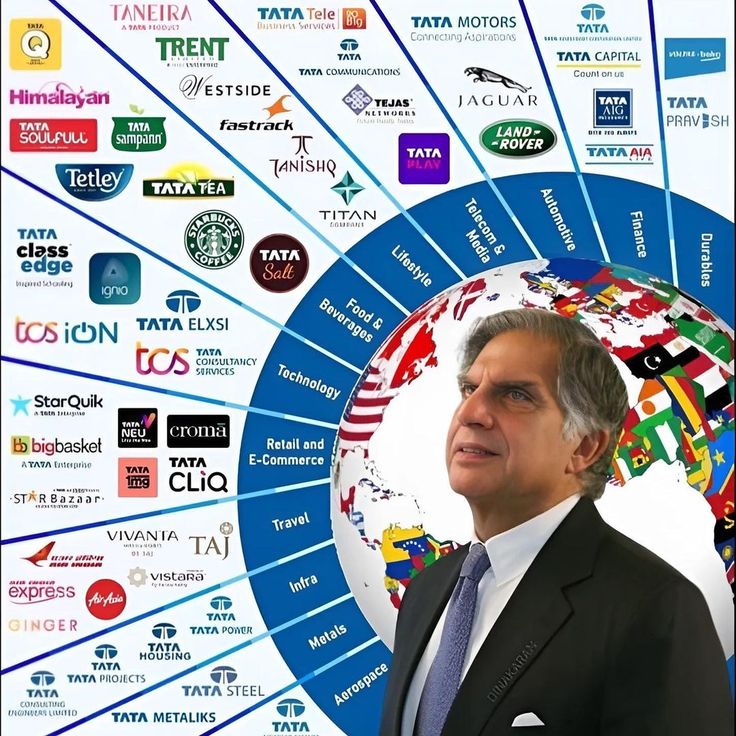
Born into one of India’s most respected business families, Ratan Tata transformed the Tata Group into a globally recognized conglomerate. Under his leadership, the group expanded across continents, acquired prestigious international brands, and strengthened its position as one of the most trusted business houses in the world. From automobiles and steel to information technology and hospitality, his strategic direction reshaped Indian industry. He served as Chairman of Tata Sons from 1991 to 2012 and briefly returned as interim chairman in 2016.
Yet what truly distinguished him was his commitment to social responsibility. Through the Tata Trusts and various charitable initiatives, he championed healthcare, education, rural development, and disaster relief. Even after his passing in October 2024 at the age of 86, his vision continues to inspire entrepreneurs, students, and leaders around the globe.
Early Life and Educationhttps://en.wikipedia.org/wiki/Ratan_Tata

Family Background and Childhood

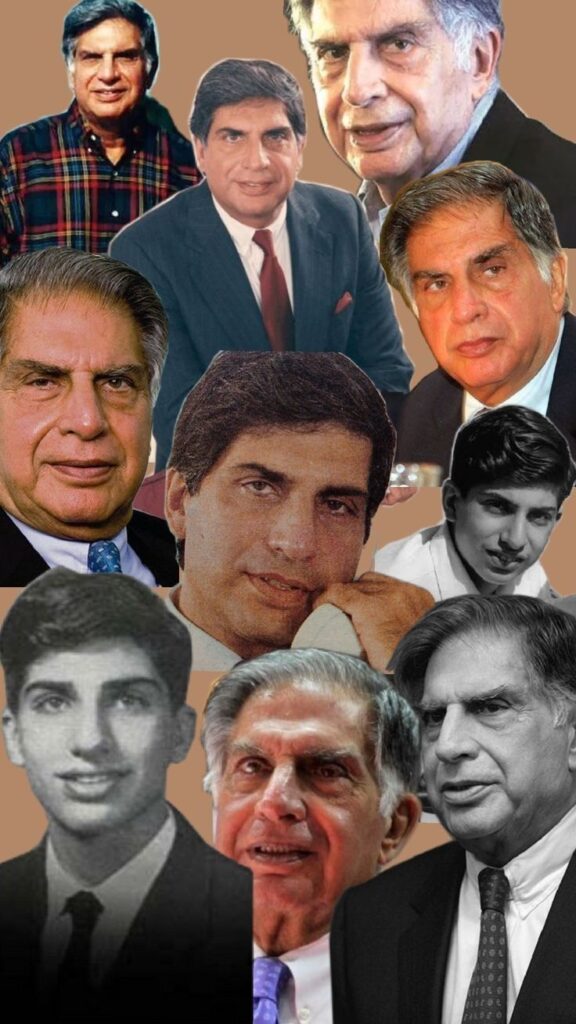
On December 28, 1937, Ratan Naval Tata was born in Mumbai. He was a member of the illustrious Tata family, whose contributions shaped contemporary Indian business. Despite coming from a wealthy family, he had a difficult upbringing. His grandmother, Lady Navajbai Tata, reared him mostly after his parents divorced, and her discipline and morals had a significant impact on his personality.
Growing up, Ratan Tata developed a strong sense of independence and humility. These qualities remained evident throughout his life. Unlike many heirs to large business empires, he never displayed arrogance or entitlement. Instead, he earned respect through hard work, empathy, and professionalism. Friends and colleagues often described him as approachable, thoughtful, and deeply caring.
His upbringing also instilled a strong commitment to serving society. The Tata family tradition emphasized that business should contribute positively to communities and national development. This philosophy became the cornerstone of Ratan Tata’s leadership style and guided many of his future decisions.
Academic Journey and Global Exposure
Ratan Tata continued his study in the US, earning a degree in structural engineering and architecture from Cornell University. Later on, he finished Harvard Business School’s Advanced Management Program.
His international education exposed him to diverse cultures, business practices, and management philosophies. Rather than focusing solely on profits, he became interested in creating products and services that improved people’s lives. This perspective later influenced several groundbreaking initiatives within the Tata Group.
The combination of technical expertise, global exposure, and strong ethical values prepared him for a leadership journey that would transform one of India’s largest business conglomerates into a global powerhouse.
The Rise of a Business Icon
Joining the Tata Group
Ratan Tata began his career within the Tata Group by working on the shop floor of Tata Steel. Instead of immediately occupying executive positions, he gained firsthand experience of manufacturing operations and employee challenges. This practical approach helped him understand the organization from the ground up.
His early years involved various assignments across Tata companies. These experiences broadened his understanding of business operations, workforce management, and strategic planning. While many expected him to inherit leadership effortlessly, he chose to earn credibility through dedication and performance.
This willingness to learn from every level of the organization later enabled him to make informed decisions and build strong relationships with employees across the Tata ecosystem.
Becoming Chairman of Tata Sons
In 1991, Ratan Tata succeeded JRD Tata as Chairman of Tata Sons. At the time, the Tata Group consisted of numerous companies operating independently with limited coordination. The challenge before him was enormous.
He presented a cohesive vision that promoted cooperation, effectiveness, and creativity. He turned a group of companies into a unified worldwide corporation by fortifying the Tata brand and optimizing processes. Opportunities for growth and worldwide expansion were created during his tenure as India’s economy liberalized.
The transition was not always easy. Resistance from traditional management structures tested his resolve. However, his persistence and long-term thinking eventually delivered remarkable results.
Transforming the Tata Group
Global Expansion Strategy
One of Ratan Tata’s most significant achievements was his determination to globalize the Tata Group. At a time when many Indian companies focused primarily on domestic markets, he envisioned Tata as an international brand competing with the world’s best organizations.
His strategy involved acquiring established global companies, expanding into new markets, and enhancing product quality. These initiatives helped Tata gain recognition across Europe, North America, Asia, and Africa.
The transformation elevated India’s reputation in the global business community. Tata became a symbol of Indian excellence, demonstrating that homegrown enterprises could successfully compete on the international stage.
Landmark Acquisitions
Jaguar Land Rover Acquisition
Perhaps the most celebrated acquisition under Ratan Tata’s leadership was Jaguar Land Rover (JLR). Many industry observers questioned the decision when Tata Motors acquired the luxury automotive brands from Ford in 2008.
Ratan Tata, however, had faith in the potential of the well-known British brands. Jaguar Land Rover saw tremendous expansion, innovation, and profitability while it was owned by Tata. The acquisition turned into a classic illustration of sound management and strategic vision.
Corus Steel Acquisition
Another major milestone was the acquisition of Corus Steel in 2007. This deal positioned Tata Steel among the world’s leading steel producers and expanded its global footprint.
The acquisition demonstrated Ratan Tata’s willingness to take bold decisions. While challenging economic conditions later tested the investment, the move showcased his ambition to establish Indian businesses as major global players.
Innovation and Entrepreneurship
The Vision Behind Tata Nano
Ratan Tata’s innovative mindset was perhaps best illustrated by the creation of the Tata Nano. Inspired by families traveling on two-wheelers under unsafe conditions, he envisioned an affordable car that could provide safer transportation for millions of Indians.
Although the Nano faced commercial challenges, its underlying purpose reflected his commitment to solving real-world problems. The project demonstrated that innovation could be driven by social impact rather than profit alone.
The Nano remains one of the most ambitious automotive experiments in history and continues to be studied as a case of disruptive innovation.
Supporting Indian Startups
In his later years, Ratan Tata emerged as a mentor and investor for numerous Indian startups. He invested in technology-driven businesses and encouraged young entrepreneurs to think boldly and act ethically.
Many startup founders admired his willingness to listen, advise, and support innovative ideas. His investments extended beyond financial returns; they reflected his belief in nurturing India’s entrepreneurial ecosystem.
Through these efforts, he helped shape a new generation of business leaders committed to innovation and social impact.
Leadership Philosophy
Ethics Before Profits
Ratan Tata consistently emphasized the importance of ethical leadership. He believed that sustainable success required honesty, transparency, and accountability. This philosophy distinguished the Tata Group from many competitors and strengthened public trust.
His famous approach can be summarized simply: doing the right thing matters more than maximizing short-term profits. This principle guided decisions across industries and established Tata as one of the world’s most respected corporate brands.
In an era where corporate scandals frequently dominate headlines, Ratan Tata’s commitment to integrity serves as a powerful reminder that ethical leadership remains a competitive advantage.
Humility as a Strength

Despite his achievements, Ratan Tata remained remarkably humble. He avoided excessive publicity and focused on meaningful contributions rather than personal recognition.
Stories of his kindness became legendary. Whether helping employees during crises, supporting animal welfare initiatives, or mentoring young entrepreneurs, he consistently demonstrated compassion and empathy.
His humility strengthened his credibility and earned admiration across generations. People respected not only what he accomplished but also how he treated others.
Ratan Tata’s Philanthropic Legacy
Contributions Through Tata Trusts
The Tata Trusts represent one of India’s largest philanthropic organizations, supporting initiatives across healthcare, education, nutrition, water management, and rural development. Ratan Tata played a pivotal role in expanding and modernizing these efforts.
The Trusts continue to impact millions of lives through sustainable development programs. Their work focuses on creating long-term solutions rather than temporary relief, reflecting Ratan Tata’s belief in empowering communities.
Even after his passing, Tata Trusts remain committed to carrying forward his vision of nation-building and social progress.
Education, Healthcare, and Rural Development
One of Ratan Tata’s greatest contributions was his unwavering support for social development. Educational scholarships enabled countless students to pursue higher education. Healthcare initiatives improved access to medical services in underserved regions. Rural development programs strengthened livelihoods and community resilience.
During national emergencies, Tata organizations consistently stepped forward to provide assistance. The Tata Group and Tata Trusts have supported disaster relief, public health initiatives, and community welfare programs across India.
His philanthropic philosophy emphasized dignity, sustainability, and measurable impact, ensuring that charitable efforts created lasting change.
Awards and Global Recognition
Ratan Tata received numerous prestigious awards throughout his career. Among the most notable were the Padma Bhushan in 2000 and the Padma Vibhushan in 2008, two of India’s highest civilian honors.
| Award | Year |
|---|---|
| Padma Bhushan | 2000 |
| Maharashtra Bhushan | 2006 |
| Padma Vibhushan | 2008 |
| Honorary Knight Commander (UK) | 2009 |
| Honorary Knight Grand Cross (UK) | 2014 |
| Assam Baibhav | 2021 |
These recognitions reflected his contributions to business, philanthropy, education, and nation-building. Yet those who knew him often noted that he valued impact more than awards.
Lessons Entrepreneurs Can Learn from Ratan Tata
Modern entrepreneurs can learn invaluable lessons from Ratan Tata’s journey. His career demonstrates that long-term success depends on vision, integrity, resilience, and empathy.
Some key lessons include:
- Think beyond short-term profits.
- Prioritize ethics in every decision.
- Embrace innovation and calculated risk.
- Invest in people and communities.
- Stay humble regardless of success.
These principles remain highly relevant in today’s rapidly evolving business landscape. Leaders who combine ambition with responsibility are more likely to build enduring organizations.
Ratan Tata’s Enduring Impact on Indiahttps://sunil11.dgrisers.com/ratan-tata-symbol-of-humanity/
The impact of Ratan Tata goes much beyond the businesses he oversaw. He changed Indians’ perceptions about corporate leadership. He proved that social responsibility and commercial success are compatible. He encouraged business owners to strive for innovation while maintaining moral principles.
Today, his legacy lives on through the Tata Group, Tata Trusts, educational institutions, healthcare initiatives, startup investments, and countless lives touched by his generosity. The respect he earned transcended industry, geography, and generation.
Even years from now, Ratan Tata will be remembered not merely as a successful businessman but as a leader who believed that the true purpose of success is to improve the lives of others.
Conclusion
Ratan Tata’s life is a remarkable story of vision, courage, compassion, and integrity. From transforming the Tata Group into a global enterprise to supporting millions through philanthropic initiatives, he set standards that few leaders can match. His decisions reshaped industries, strengthened India’s global reputation, and inspired countless entrepreneurs to dream bigger.
What makes his legacy truly unique is the balance he achieved between business excellence and human values. He proved that leadership is not about power or wealth but about creating positive change. As future generations study his journey, they will find timeless lessons in innovation, humility, and service to society. Ratan Tata’s legacy is not confined to history—it continues to guide and inspire the future.
FAQs
1. Who was Ratan Tata?
Ratan Tata was an Indian industrialist, philanthropist, and former Chairman of Tata Sons who transformed the Tata Group into a globally recognized business conglomerate.
2. Why is Ratan Tata famous?
He is famous for global acquisitions such as Jaguar Land Rover and Corus Steel, as well as his commitment to ethical leadership and philanthropy.
3. What are Ratan Tata’s biggest achievements?
His major achievements include expanding the Tata Group internationally, launching Tata Nano, supporting startups, and strengthening Tata Trusts’ social impact initiatives.
4. What awards did Ratan Tata receive?
He received numerous honors, including the Padma Bhushan, Padma Vibhushan, Maharashtra Bhushan, and honorary British knighthoods.
5. What is Ratan Tata’s legacy?
His legacy combines business excellence, philanthropy, innovation, humility, and a lifelong commitment to improving society through ethical leadership.